There is no single replacement age for every commercial asphalt parking lot. The right decision depends on pavement condition, traffic, drainage, the strength of the base and the repair history.
Commercial asphalt parking lots are a significant investment for property owners and managers. Over time, traffic, moisture, weather exposure and routine use can lead to cracking, rutting, potholes and surface deterioration. Eventually, a property may need anything from localized repairs to resurfacing or full-depth reconstruction.
So, how often does asphalt need to be replaced? There is no universal schedule. A pavement that was designed for its expected traffic, constructed correctly and maintained appropriately may remain serviceable for many years. Another lot may deteriorate much sooner if heavy vehicles, drainage problems or weak underlying materials are not addressed.
Replace asphalt when its condition and structural performance can no longer be restored reliably through appropriate maintenance, repairs or resurfacing. A qualified pavement evaluation can help identify the right level of work.
How Long Does a Commercial Asphalt Parking Lot Last?
Commercial asphalt does not have one guaranteed service life. The useful life of a parking lot depends on its pavement design, construction quality, subgrade and base conditions, vehicle loading, water management and maintenance history.
It is also important not to confuse a pavement design period or traffic-loading category with a promised replacement date. For example, the Wisconsin Asphalt Pavement Association’s Asphalt Parking Lot Design Guide addresses planning, subgrade and drainage, construction and maintenance. Its reference to 20-year design traffic criteria is not a guarantee that every parking lot will last 20 years or should be replaced at that age.
For property managers, the more useful question is whether the existing pavement still provides a sound surface and adequate structural support for the vehicles using the site. A condition assessment is more reliable than using age alone.
What Factors Affect Asphalt Pavement Lifespan?
Original construction and pavement support
Asphalt is only one part of a pavement system. The prepared soil below it and the aggregate base help distribute vehicle loads. If the subgrade is unstable, the base is poorly prepared or the pavement was not designed for the site’s expected traffic, distress may develop earlier than anticipated.
Heavy vehicle traffic and turning areas
Loading docks, truck entrances, dumpster areas and delivery routes often experience more demanding use than ordinary parking stalls. Property managers should monitor these locations because repeated heavy loads, braking and turning can contribute to rutting, shoving and fatigue-related cracking.
Drainage and Birmingham-area rainfall
Water should drain away from the pavement rather than repeatedly collecting in low spots. Birmingham property managers can check lots after rainfall for standing water, blocked inlets, eroded edges and cracks that appear to be allowing water into the pavement. The National Weather Service Birmingham rainfall tables provide local precipitation records; on an individual property, the key issue is how effectively the site manages that water.
Signs Your Asphalt Parking Lot May Need Replacement
One isolated defect does not automatically mean the entire parking lot must be replaced. However, widespread, recurring or interconnected problems may indicate that the pavement needs more than routine surface maintenance.
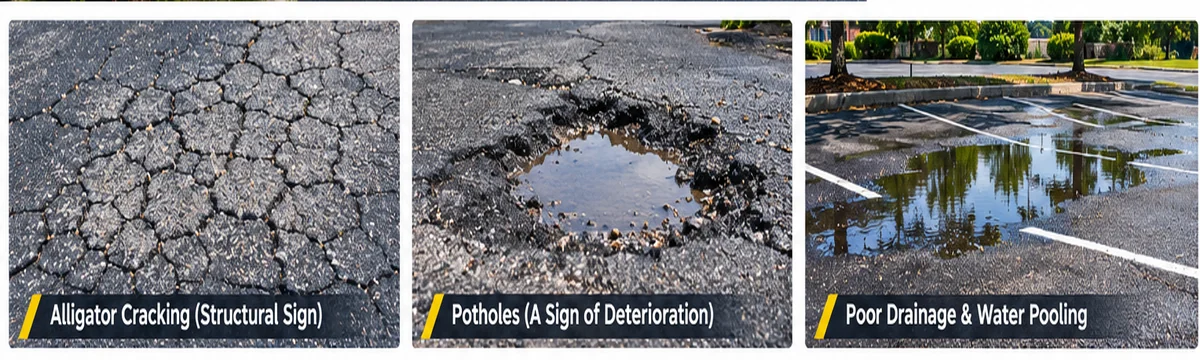
- Widespread alligator cracking: Interconnected cracks can indicate fatigue-related distress and may point to a problem in the pavement structure or support layers.
- Recurring potholes: Potholes that return after patching, or appear across several areas, call for investigation of the underlying cause.
- Deep or repeated rutting: Depressions in vehicle wheel paths may indicate permanent deformation in the asphalt layers or underlying pavement.
- Extensive cracking: Large areas of interconnected, block or edge cracking may allow water to reach the pavement structure and can signal broader deterioration.
- Persistent standing water: Repeated ponding may point to grading, settlement or drainage issues that should be corrected before placing a new surface.
- Raveling and surface loss: When aggregate particles loosen and the surface becomes rough or pitted over large areas, the pavement may need more than minor maintenance.
- Frequent repairs across the lot: Repeated patching in several locations can make it worthwhile to compare the cost and expected performance of continued repairs with a larger rehabilitation project.
The Federal Highway Administration’s Distress Identification Manual classifies asphalt pavement problems such as fatigue cracking, potholes, rutting and raveling. These distress types help describe what is visible; they do not replace a site-specific engineering evaluation.
Should You Repair, Resurface or Completely Replace Asphalt?
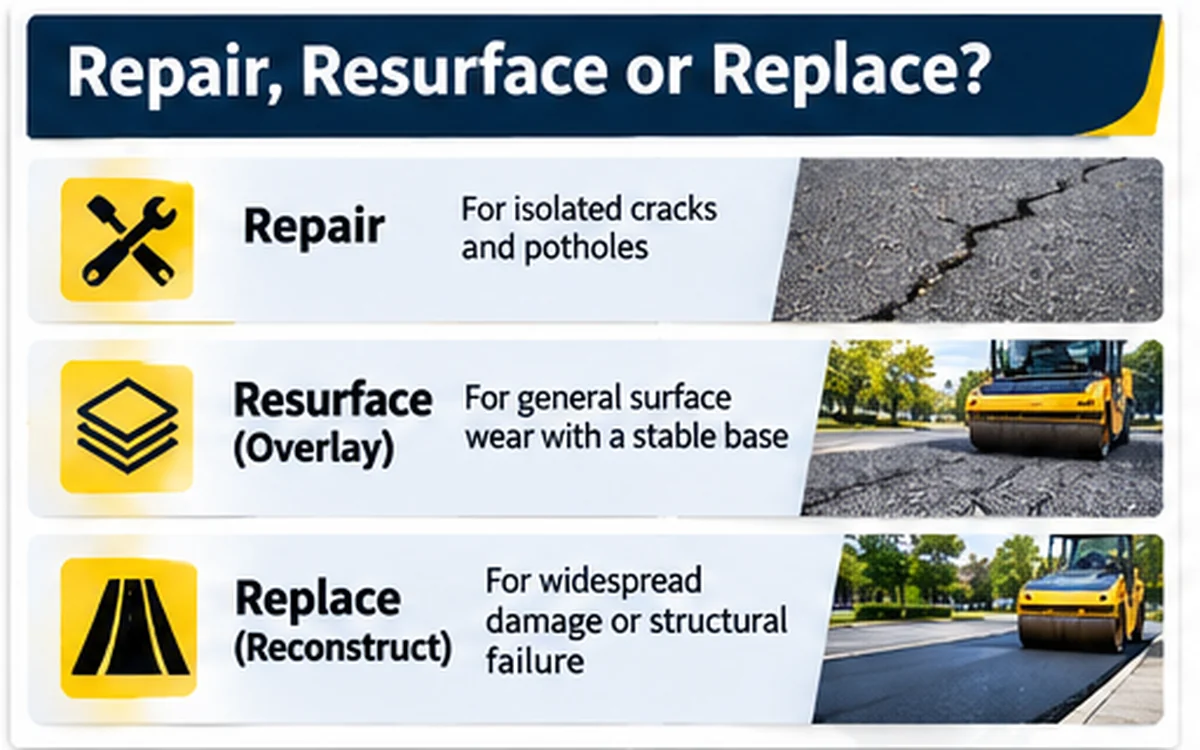
The appropriate solution depends on how much pavement is affected and whether the existing pavement structure remains stable. A surface treatment should not be used to hide a deeper problem.
| Option | When it may be appropriate | What to check |
|---|---|---|
| Localized repair | Damage is limited to isolated cracks, potholes or small failed sections. | Confirm that the surrounding pavement and underlying support are sound. |
| Resurfacing / overlay | The surface has widespread wear but the existing pavement remains structurally suitable. | Repair failed areas first and review drainage, grades and transitions. |
| Milling and overlay | Part of the old surface needs to be removed or adjusted before a new asphalt layer is placed. | Check surface elevations, tie-ins, drainage and the condition below the milled layer. |
| Full-depth reconstruction | Structural failure, unstable support or widespread deterioration cannot be addressed reliably by surface work. | Evaluate the failed layers, base, subgrade, drainage and traffic requirements. |
When localized asphalt repair may be enough
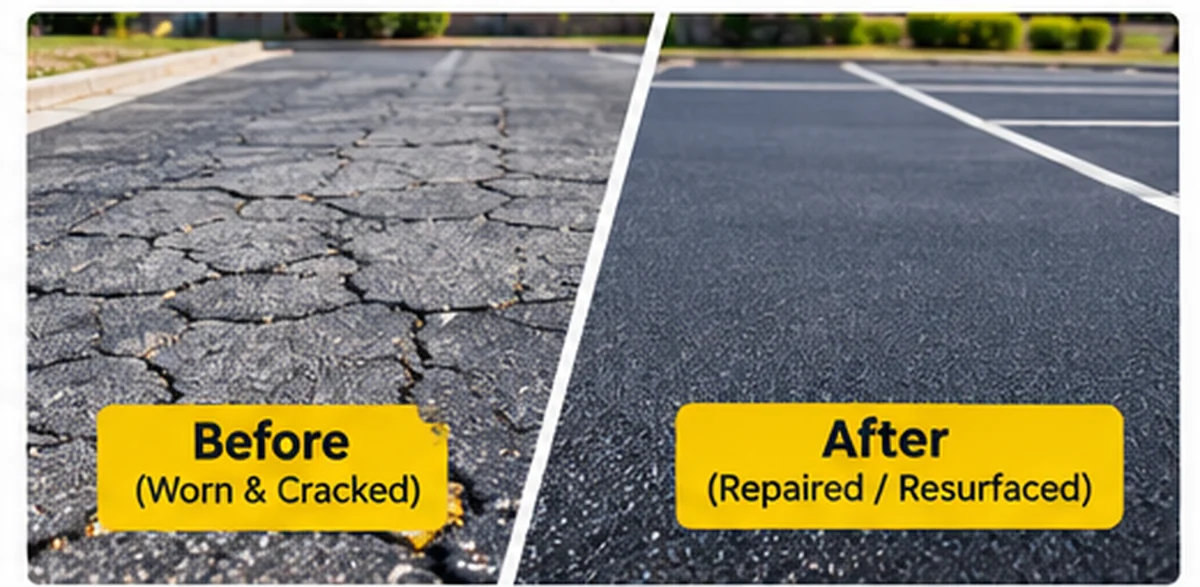
Repair may be appropriate when defects are limited and the surrounding pavement is still sound. The repair should address the cause of the damage where practical; otherwise, the same area may fail again.
When resurfacing may make sense
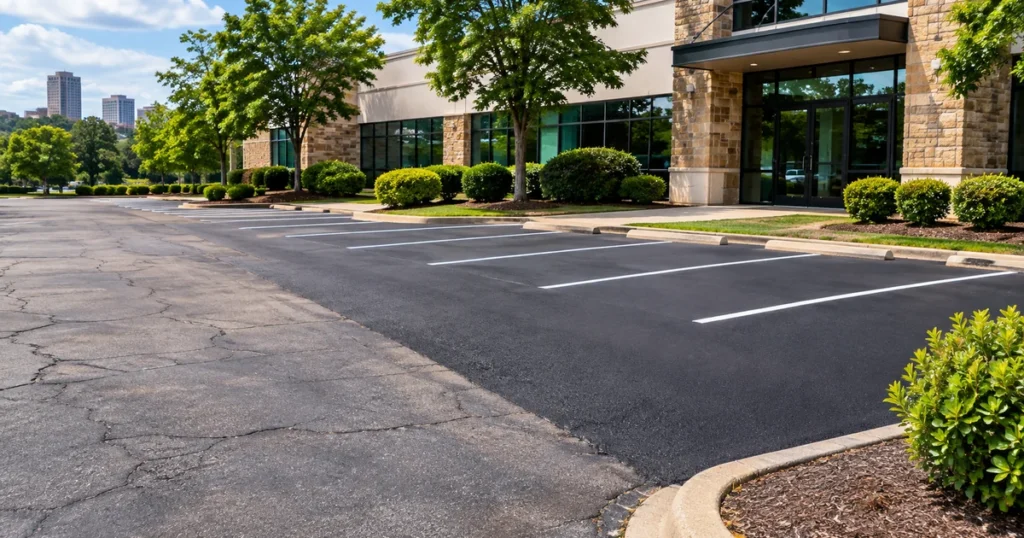
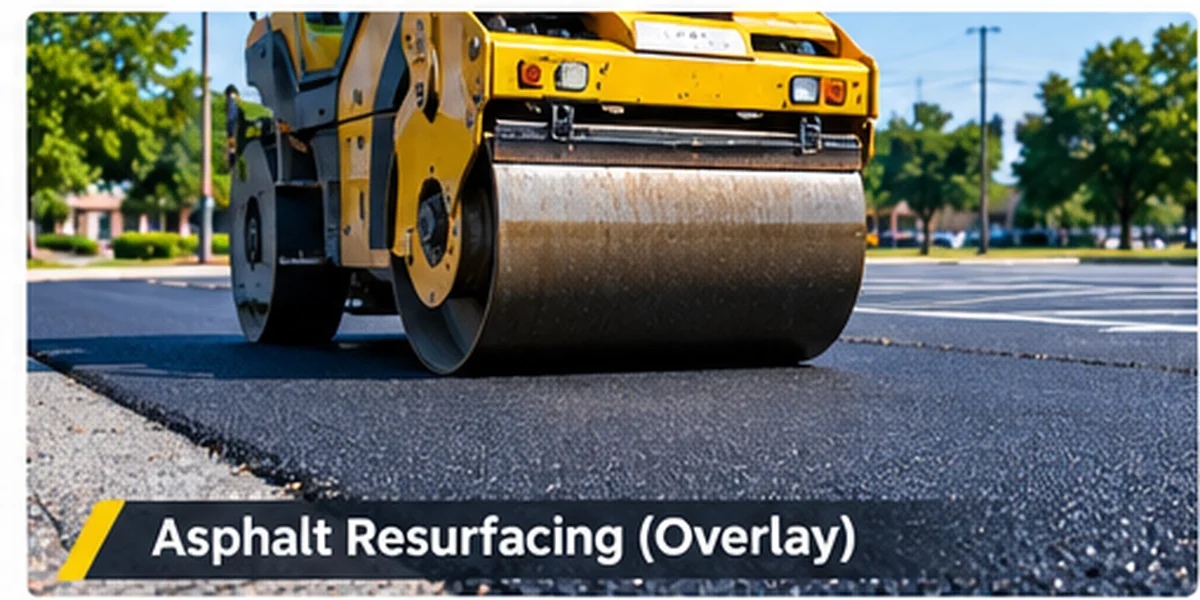
An overlay can renew a worn surface when the existing pavement provides adequate support. Before resurfacing, failed areas should be repaired and drainage, pavement height, curb lines and accessible routes should be considered. An overlay is not a dependable solution for widespread structural failure.
When full replacement may be necessary
Reconstruction may be appropriate when structural problems extend through the asphalt and supporting layers, when settlement keeps returning, or when widespread failures cannot be corrected through isolated repairs or an overlay. The scope should be based on an evaluation of the site rather than a blanket rule.
How Often Should Asphalt Be Sealed?
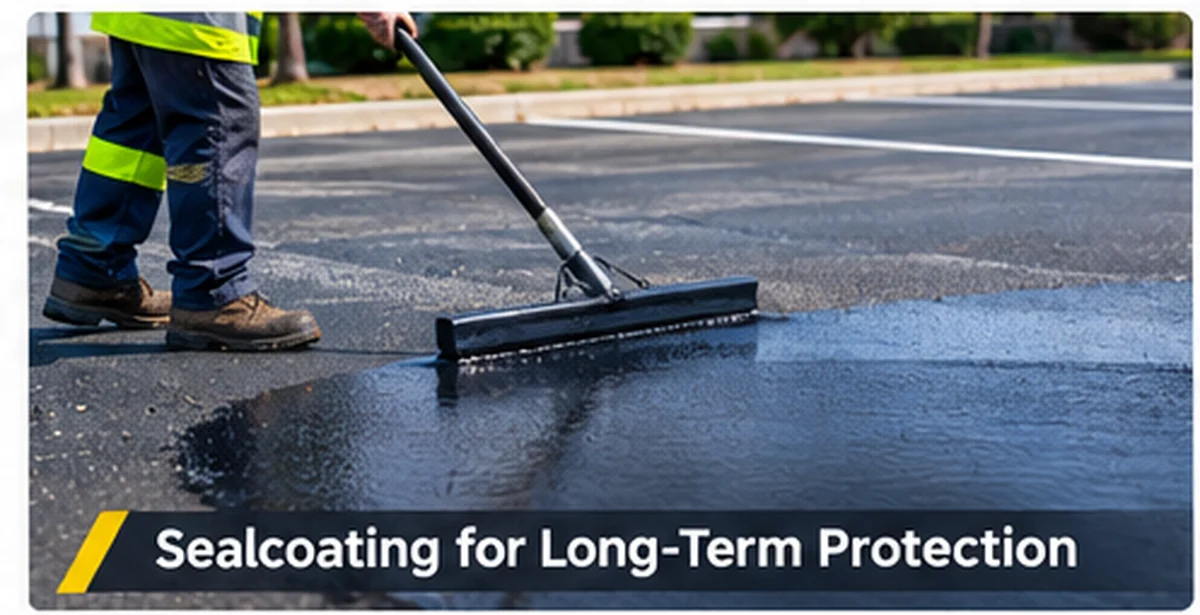
Sealcoating can help renew an asphalt surface that has become dry or brittle and can help seal small surface cracks and voids. It does not rebuild a failed base, correct significant rutting or repair widespread alligator cracking.
The Asphalt Institute says a well-designed and properly constructed low-traffic pavement, such as a driveway or parking lot, generally should not require sealing for approximately 2 to 5 years after construction, depending on climate and the quality of the original work. This is guidance about when a new surface may first need consideration—not a rule to apply sealcoat automatically every two to five years. Later applications should be based on pavement condition and product requirements.
For service details, see our parking lot sealcoating in Birmingham page.
How Property Managers Can Plan Ongoing Asphalt Maintenance
A repeatable inspection process helps property managers record changes, prioritize work and make better-informed decisions. Consider these practical steps:
Commercial parking lot review checklist
- Walk the parking lot periodically and photograph new cracks, potholes, rutting and surface loss.
- Check loading docks, truck routes, entrances and dumpster areas separately from ordinary parking stalls.
- Inspect drainage inlets and low spots after rainfall; record where water remains.
- Keep a dated record of patching, crack treatment, sealcoating and resurfacing work.
- Review pavement condition and repair history before preparing annual maintenance budgets.
- Ask for an explanation of the proposed repair method and the condition it is intended to correct.
When an evaluation indicates that paving work is needed, compare options in terms of the existing pavement condition, expected traffic, drainage requirements, phasing and access for tenants, customers and deliveries. For broader project planning, visit our commercial asphalt paving in Birmingham page. For localized defects, see asphalt repair and patching .
Frequently Asked Questions About Asphalt Replacement
How often does asphalt need to be replaced?
There is no universal replacement interval. Replacement depends on the condition of the asphalt and its supporting layers, traffic, drainage and maintenance history. A pavement assessment can help determine whether repair, resurfacing or reconstruction is appropriate.
Can an asphalt parking lot last for decades?
Some pavements remain serviceable for many years when they are properly designed, constructed and maintained. However, no specific lifespan is guaranteed for every property. The actual condition of the pavement should guide maintenance and replacement decisions.
Does alligator cracking mean the entire parking lot needs replacement?
No. Limited areas may be suitable for localized full-depth repair. Widespread fatigue cracking can indicate deeper structural distress and should be evaluated to determine whether larger-scale rehabilitation is needed.
Is resurfacing better than full replacement?
Resurfacing may be suitable when the existing pavement remains structurally sound. If the base or subgrade has failed, an overlay may not address the underlying problem. The condition of the pavement should determine the option.
Should a new asphalt parking lot be sealed right away?
The Asphalt Institute says a well-designed, properly constructed low-traffic pavement generally should not require sealing for approximately two to five years after construction. Timing depends on climate and original work quality; follow the pavement and product recommendations.
What should I inspect before requesting an asphalt replacement estimate?
Record visible cracking, potholes, rutting, standing water, repeated patch failures and the locations where heavy vehicles travel. Share the repair history and ask the paving professional to explain whether the proposed work addresses surface wear or structural failure.
Discuss Your Commercial Asphalt Parking Lot
Whether your property needs localized repairs, resurfacing or a closer review of structural damage, start with an assessment of the existing pavement and site requirements.