A practical commercial parking lot maintenance checklist for property managers. Learn what to inspect, how to document pavement problems and when to consider repair, sealcoating or resurfacing.
A commercial parking lot does more than provide space for vehicles. It is part of a property’s first impression, daily operations, accessibility and overall pavement safety. Cracks, potholes, standing water and faded pavement markings can make a property harder to navigate and may allow minor surface problems to develop into more expensive repairs.
For property managers in Birmingham, Alabama, a consistent parking lot maintenance checklist can make it easier to identify visible issues, document changes and decide when professional pavement advice may be appropriate.
This guide focuses on asphalt parking areas at retail centers, office properties, warehouses, industrial facilities and other commercial sites. Use it as a practical inspection and planning tool, not as a substitute for a site-specific pavement assessment or applicable safety and accessibility requirements.
What Should a Commercial Parking Lot Maintenance Program Cover?
A useful commercial parking lot maintenance program should address five main areas:
The goal is to identify developing problems early, understand which issues need attention first and choose maintenance work that matches the pavement’s actual condition.
Parking Lot Inspection Checklist: What to Look For
Walk the parking area systematically rather than checking only the entrance or the most visible spaces. Include driving lanes, parking rows, loading areas, access routes, perimeter edges and locations where water collects.
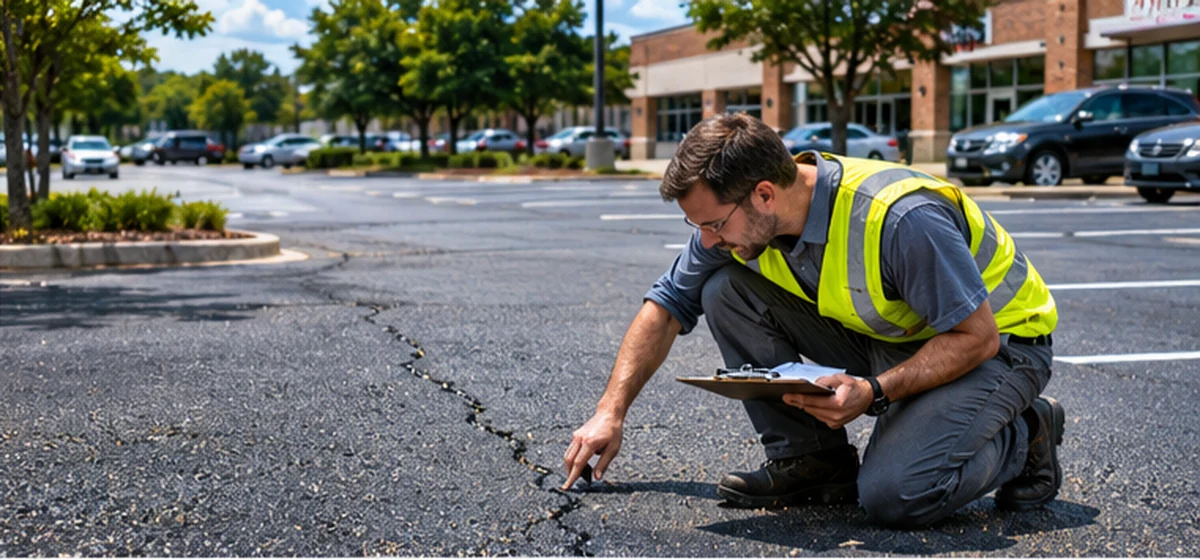
1. Inspect Asphalt Cracks and Surface Damage
Look for changes in the asphalt surface, including:
- Longitudinal cracks running along the pavement.
- Transverse cracks crossing the pavement.
- Block cracking that forms connected rectangular patterns.
- Alligator cracking, which appears as interconnected cracks resembling an alligator’s skin.
- Potholes, missing asphalt and loose surface material.
- Raveling, where aggregate becomes loose or separates from the surface.
- Depressions, rutting or uneven areas.
- Deterioration around previous patches and utility cuts.
- Broken or crumbling pavement edges.
Record the location, approximate size and visible severity of each issue. Photograph the same areas during later inspections so you can compare whether damage is spreading.
Pay particular attention to interconnected cracking, repeated potholes and areas that appear to sink or hold water. These conditions can indicate more than a simple surface issue. The underlying cause may require professional evaluation before selecting a repair method.
2. Check Drainage and Standing Water
Water management is an important part of asphalt parking lot maintenance. After rainfall, look for:
- Water that remains in the same location after surrounding areas have drained.
- Blocked or damaged drainage inlets.
- Soil erosion near pavement edges.
- Sediment collecting around drains.
- Water flowing across pedestrian routes.
- Areas where water appears to move toward buildings or entrances.
- Evidence of oil, fuel or other spills near drainage points.
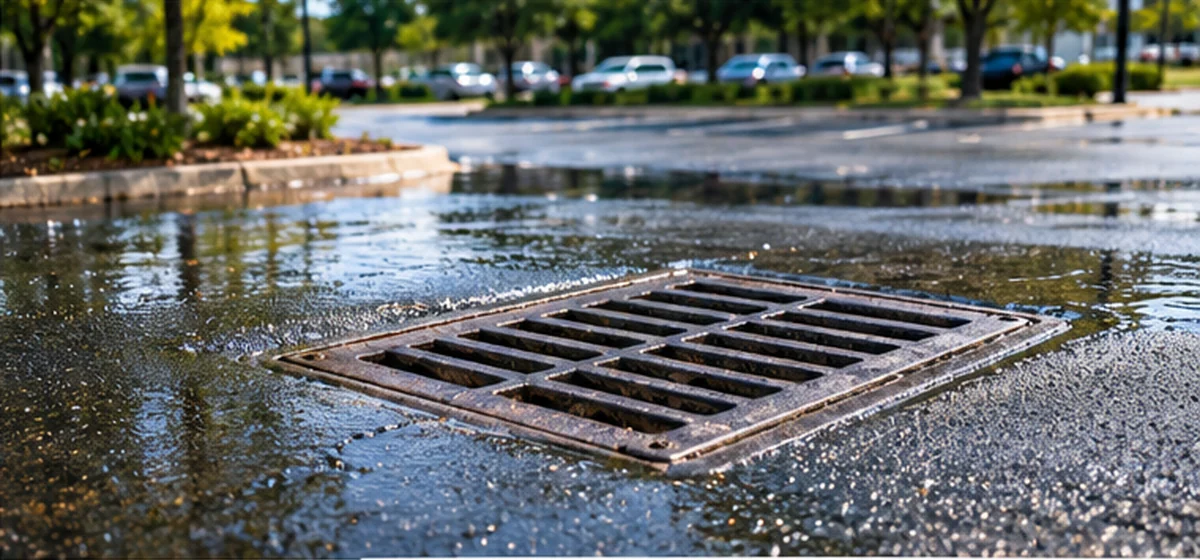
Birmingham’s Stormwater Management Division explains that runoff from parking lots and other paved surfaces can carry pollutants such as oil, chemicals and eroded soil into the stormwater drainage system and waterways. Drainage observation and responsible spill awareness are therefore important parts of property maintenance.
Read City of Birmingham Stormwater Management guidance ↗Do not assume that applying a surface treatment will correct a drainage problem. Persistent ponding may be related to pavement slope, settlement, blocked drainage infrastructure or other site conditions. The cause should be investigated before selecting a treatment.
3. Review Parking Lot Markings and Traffic Flow
Pavement markings help drivers and pedestrians understand how to use a parking area. Inspect:
- Parking stall lines.
- Directional arrows.
- Stop bars and traffic-control markings.
- Crosswalks and pedestrian routes.
- Fire-lane markings where applicable.
- Loading zones and designated spaces.
- Accessible parking spaces and access aisles.
Look for faded, damaged or confusing markings. Also check whether previous pavement repairs have affected the visibility or placement of existing lines.
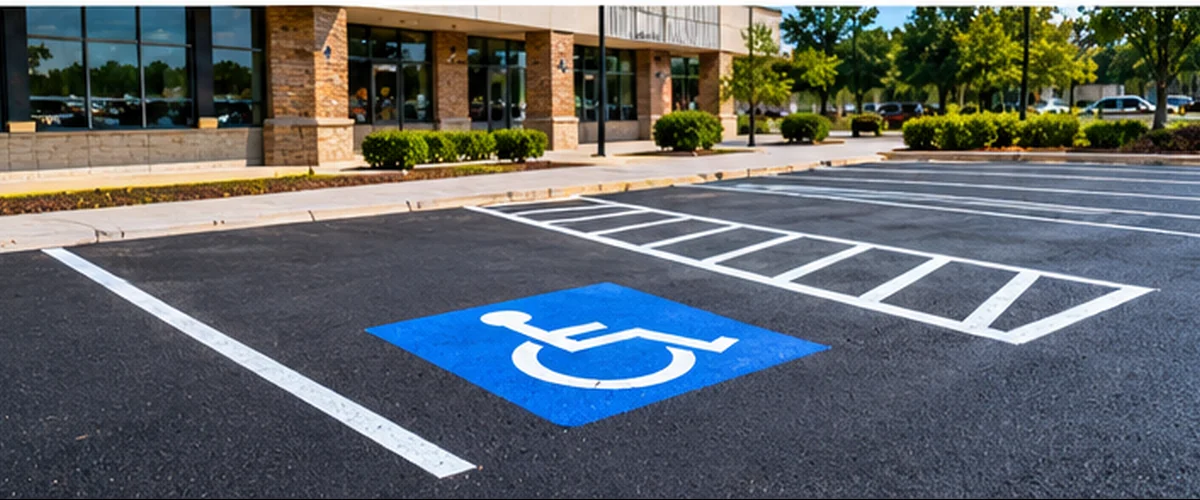
The U.S. Department of Justice explains that accessible parking spaces must include appropriately marked access aisles and that accessible parking surfaces must be firm, stable and slip-resistant. Requirements depend on the applicable layout and standards.
Review official ADA Accessible Parking Guidance ↗This checklist is not an ADA compliance certification. Property managers should consult applicable requirements and qualified professionals when assessing accessibility.
4. Check Transitions, Edges and Pedestrian Areas
Inspect the areas where vehicles, pedestrians and pavement surfaces meet. Look for:
- Uneven transitions between asphalt and concrete.
- Broken pavement near sidewalks.
- Deteriorated curb edges.
- Loose material at driveway entrances.
- Trip hazards along pedestrian routes.
- Damage near loading docks and delivery areas.
- Settlement around utility covers or drainage structures.
Record locations that could create vehicle or pedestrian hazards and arrange appropriate assessment. Where there is an immediate safety concern, use suitable temporary access controls while the issue is addressed.
A Practical Commercial Parking Lot Maintenance Schedule
A parking lot maintenance schedule should reflect the size of the property, traffic volume, pavement age, drainage conditions, weather exposure and previous repair history.
There is no single inspection interval that is appropriate for every commercial property. The following is a flexible planning framework that property managers can adapt.
During Regular Property Reviews
Check newly visible potholes, cracks, loose surface material, damaged markings, debris and standing water.
Record changes rather than relying on memory.After Significant Rain or Severe Weather
Review drainage performance, ponding, erosion, sediment accumulation and newly damaged pavement edges.
Follow site stormwater and spill-response procedures.During Seasonal or Quarterly Reviews
Compare photographs and inspection records. Check whether cracks have expanded, patches have deteriorated or markings have faded.
Update the repair priority list.During Annual Budget Planning
Review pavement condition, previous maintenance costs, traffic patterns and anticipated project requirements.
Plan according to actual site conditions.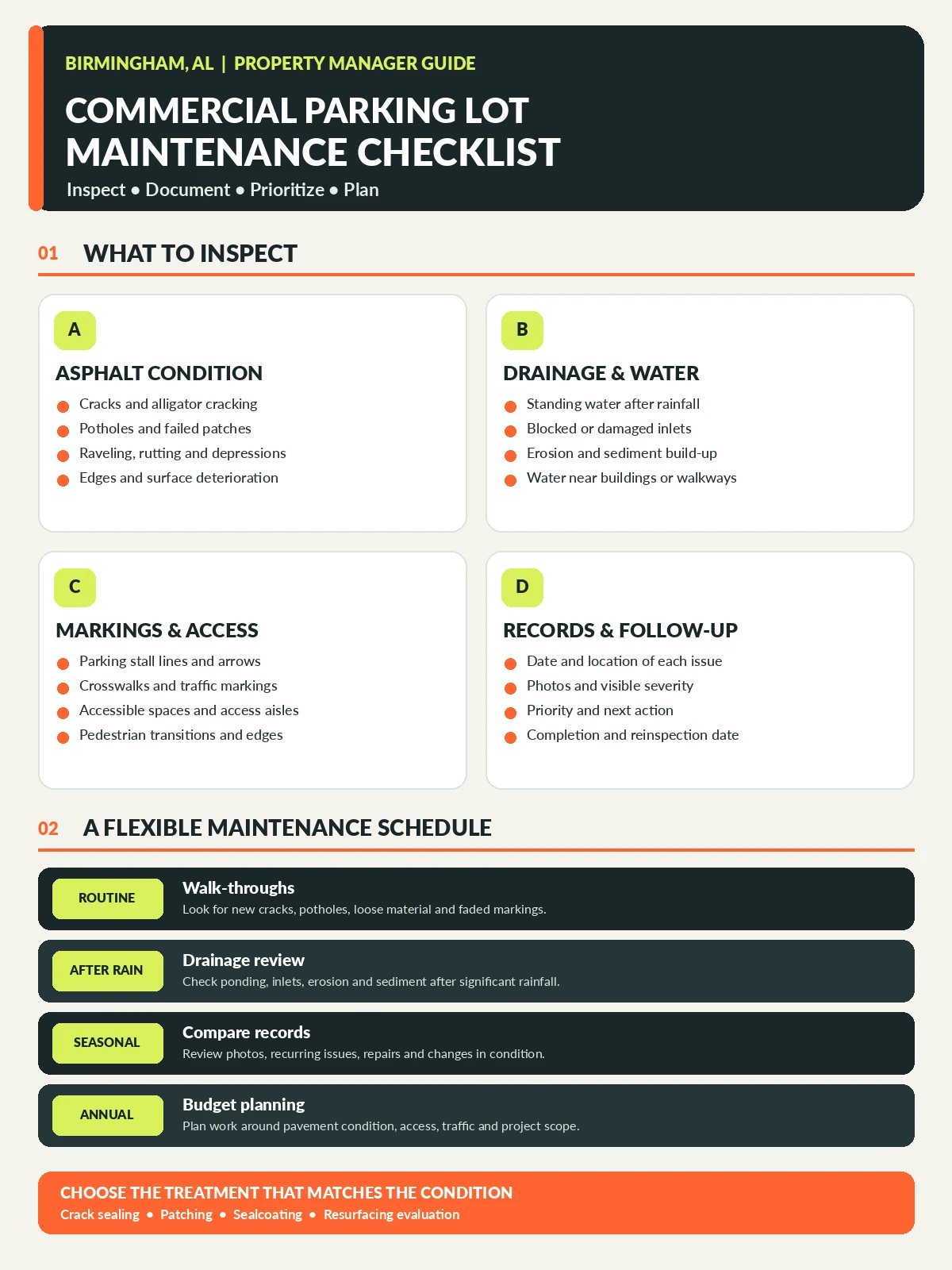
Properties with heavier use, recurring pavement problems or unusual drainage conditions may need closer monitoring. Adapt the schedule to the site rather than treating these suggested review stages as universal maintenance intervals.
When to Consider Crack Sealing, Patching, Sealcoating or Resurfacing
Different pavement conditions require different approaches. Selecting a treatment without first understanding the visible damage and its possible cause can lead to unnecessary work or repairs that do not last.
Crack Sealing
May be considered where suitable cracks are allowing water and debris to enter the pavement.
Material and preparation depend on crack characteristics and pavement condition.Asphalt Patching
Localized patching may be appropriate for isolated potholes and damaged pavement sections.
Explore Asphalt Repair ↗Sealcoating
A surface-preservation treatment that may suit certain asphalt surfaces. It is not a structural repair.
Explore Parking Lot Sealcoating ↗Resurfacing or Replacement
May be considered when deterioration affects a larger area or the existing pavement needs broader rehabilitation.
Explore Commercial Asphalt Paving ↗Repeated potholes, widespread failure or extensive interconnected cracking may indicate a deeper problem involving drainage, pavement structure or the base beneath the asphalt. The cause should be evaluated before deciding whether localized patching is sufficient.
The Asphalt Institute explains that a well-designed, properly constructed low-traffic pavement such as a parking lot may not need sealing for approximately two to five years, depending on climate and original construction quality. This is general guidance, not a fixed Birmingham maintenance interval.
Read Asphalt Institute Engineering FAQs ↗The pavement’s actual condition should guide the decision. A site-specific assessment can help determine whether crack treatment, patching, preservation, resurfacing or more extensive reconstruction should be considered.
What Affects Parking Lot Maintenance Cost?
Parking lot maintenance cost depends on more than the total paved area. The required work and existing site conditions can have a substantial effect on the project scope.
Larger areas generally require more material, labour and preparation.
Isolated cracks and potholes differ from widespread surface or structural deterioration.
Water-related problems may need investigation and corrective work before surface treatments.
Surface-level work and deeper pavement repairs involve different preparation and materials.
Busy properties may need phased work or temporary traffic management.
Line repainting, cleaning, staging and site coordination can affect project scope.
A useful estimate should identify the areas involved, the proposed treatment, preparation requirements and any additional work that may be needed.
Avoid comparing proposals on price alone. Review what each proposed scope actually includes and whether it addresses the visible condition of the pavement.
How Property Managers Can Document and Prioritize Maintenance
A simple maintenance record can make future decisions easier and help prevent recurring issues from being overlooked.
- Inspection date.
- Property area or parking-lot section.
- Description of the visible issue.
- Photograph and approximate affected area.
- Priority level and any immediate safety concern.
- Recommended next action or person responsible for follow-up.
- Completion date and post-repair review.
Prompt Attention
An immediate safety concern, significant pavement failure or drainage issue needing prompt attention.
Planned Follow-Up
Deterioration that is progressing or may cause more extensive damage if ignored.
Record and Review
Minor visible changes that should be recorded and reviewed during the next inspection.
The priority should be based on the actual site condition, not simply the age of the pavement.
Related Commercial Parking Lot Services
Depending on inspection findings, a commercial property may need one or more different types of pavement work. Explore these related service information pages:
Frequently Asked Questions
Who Is Responsible for Parking Lot Maintenance?
Responsibility generally depends on the property’s ownership, lease agreements, management arrangements and any applicable maintenance contracts. Property managers should confirm the responsibilities assigned to the owner, tenant, facilities team or maintenance provider.
How Often Should a Commercial Parking Lot Be Inspected?
Inspection frequency depends on traffic, pavement condition, property size, drainage and weather exposure. Routine walk-throughs, documented seasonal reviews and additional inspections after significant storms provide a practical starting point. Properties with heavier use or recurring issues may need closer monitoring.
How Much Does Parking Lot Maintenance Cost?
There is no reliable single price for every property. Cost depends on paved area, existing damage, repair depth, drainage, treatment selection, traffic management and project access. A site-specific scope is needed to develop a meaningful estimate.
When Should an Asphalt Parking Lot Be Sealcoated?
Sealcoating should be considered based on pavement condition and original construction quality, not simply because a fixed number of years has passed. The Asphalt Institute notes that a well-designed low-traffic parking lot may not need sealing for approximately two to five years, depending on climate and original workmanship.
When Is Resurfacing Better Than Patching?
Patching may suit isolated damaged areas, while widespread deterioration may justify evaluating resurfacing or another rehabilitation option. If the pavement has recurring potholes, extensive interconnected cracking or drainage-related problems, the underlying cause should be assessed before choosing a treatment.
What Should a Parking Lot Inspection Checklist Include?
A practical inspection should review asphalt cracks, potholes, surface deterioration, drainage, pavement edges, parking markings, accessible spaces and pedestrian transitions. Record photographs, locations and follow-up priorities.
Plan the Next Step for Your Commercial Parking Lot
A consistent parking lot maintenance checklist helps Birmingham-area property managers identify visible pavement concerns, keep useful inspection records and plan work according to actual site conditions.
Whether the property needs an asphalt condition review, localized repair, sealcoating, resurfacing or refreshed pavement markings, the right next step depends on the size, use and condition of the parking area.
Project scope and service availability can be confirmed during the inquiry.- City of Birmingham — Stormwater Management
- U.S. Department of Justice — Accessible Parking Spaces
- Asphalt Institute — Engineering FAQs
This article is general maintenance information, not an engineering assessment, legal opinion or ADA compliance certification. Site conditions and applicable requirements should be reviewed by qualified professionals.